


Response within 24h.
Targeted technical modifications and project follow-up for a safe, compliant high-voltage installation.
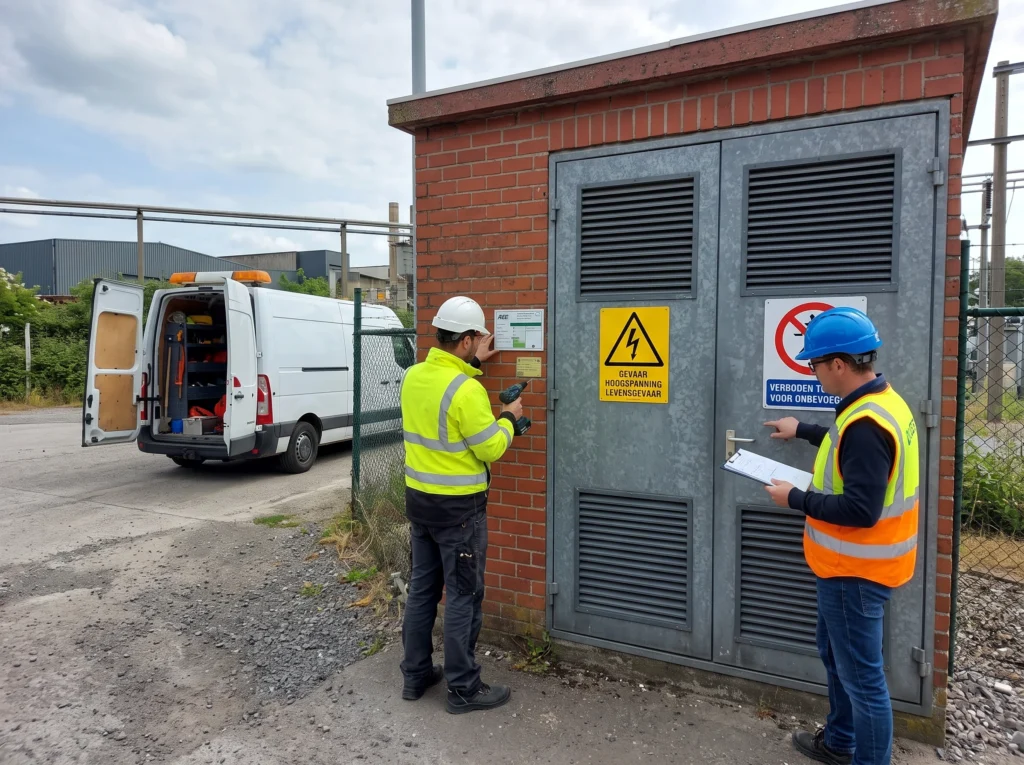
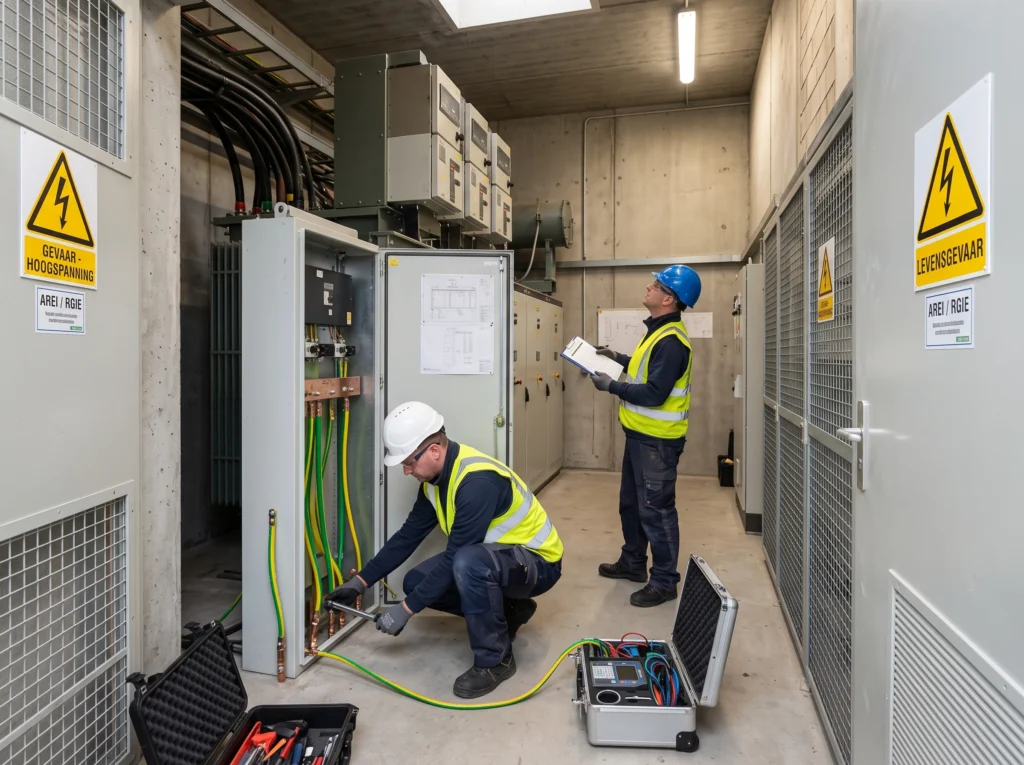
A high-voltage substation is an essential part of a building’s or business site’s electrical infrastructure. Any issues identified during an inspection must therefore be addressed correctly from a technical standpoint, with particular attention to safety, selectivity, protection, accessibility and documentation.
As Built helps professional clients analyse and resolve identified deficiencies in high-voltage substations and the associated low-voltage distribution system.
The specific work is always determined on the basis of the inspection report, the installation and the technical conditions on site.
Request a free quote
Fill in the quote form and briefly tell us what needs to be done.
Prompt follow-up (within 24 hours)
We will contact you within 24 hours. You will receive an initial estimate.
Site visit and final planning
The site manager discusses the details and price, then we schedule the work.
Execution
We carry out the work through an As Built certified partner in your area.
Compliant installation
Safe and compliant installation with clear communication and fair pricing.
Vraag een vrijblijvende offerte aan
Vul het offerteformulier in en vertel ons kort wat er moet gebeuren.
Snelle opvolging (binnen 24u)
Binnen 24 uur nemen we contact op. Je ontvangt een eerste raming.
Werfbezoek en definitieve planning
De werfleider bespreekt details en prijs, daarna plannen we de werken.
Planning & uitvoering
Na goedkeuring offerte, plannen en voeren we de werken uit via een erkende As Built-partner in jouw regio.
Conform opgeleverd
Veilige, conforme installatie met duidelijke communicatie en correcte prijs.
FAQ
Send us the inspection report. We analyse the identified non-conformities and determine which
modifications are needed to bring the installation back into compliance. If necessary, we first carry
out a technical site visit ourselves. You will then receive a clear quotation for the necessary work.
We review the complete file and assess the technical modifications required for each non-
conformity. This may involve the high-voltage installation and its associated low-voltage installation,
protective devices, earthing, signage, documentation and other components. The applicable
requirements for high-voltage installations are set out in Book 2 of the Belgian General Regulations
on Electrical Installations (AREI).
Yes. High-voltage electrical installations must undergo an annual periodic inspection. This inspection
must be carried out by an approved inspection body.
The owner, manager or operator of a non-domestic electrical installation is responsible for
maintaining the installation and must arrange for the required inspections to be carried out by an
approved inspection body. For high-voltage installations, the required routine visits must also be
organised.
Yes. Once the remedial works have been completed, we can help organise the re-inspection and
follow up on the file until the installation is declared compliant again. This gives you a single point of
contact throughout the process.
For non-domestic installations, the required electrical diagrams and plans must be available, among
other documents. Additional documents may be required depending on the installation. We review
the available file and can include the preparation of any missing technical documentation in the
compliance process.
Yes. If the required diagrams or plans are missing or no longer reflect the actual installation, we can
identify the documentation needed and update or recreate it as part of the project file.
Yes. An older substation does not automatically need to be replaced in its entirety. We first assess
its existing condition, the inspection report and the technical options. Based on this assessment, we
determine which modifications are necessary and which existing components can be retained.
Not necessarily. An installation may fail an inspection because of specific shortcomings involving
protective devices, earthing, access, signage, documentation or certain components. We therefore
first aim to address the identified non-conformities through targeted remedial work, rather than
automatically proposing a complete replacement.
This depends on the nature of the work and the configuration of the installation. A power shutdown
is necessary for certain tasks. We assess in advance how the work can be carried out safely and
how disruption to business operations can be kept to a minimum.
This depends on the number of non-conformities, the technical condition of the substation, the
availability of components and any necessary power shutdowns. After analysing the inspection
report and, if necessary, carrying out a site visit, we can draw up a more detailed schedule.
Yes. If the issues raised concern the low-voltage distribution system, or if modifications to that
system are necessary to bring the installation into compliance, this work can be included in the
project.
Yes. High-voltage installations fall under Book 2 of the AREI. Depending on the installation, other
provisions and obligations may also apply.
Yes. Our aim is to take as much of the burden off your shoulders as possible: analysing the
inspection report, carrying out a technical site visit if needed, preparing a quotation, carrying out the
modifications, preparing technical documentation and following up on the re-inspection.
Start by sending us the most recent inspection report for the high-voltage installation. Based on this
report, we assess whether we can prepare a quotation straight away or need to schedule a technical
visit to the substation first.
Yes. In addition to resolving non-conformities, substation maintenance can be arranged separately.
Regular follow-up helps identify technical defects in good time and keeps the installation safe and
reliable.